


Menu shots, interior photos, happy hours, meal deals and price promotions. Every single week, the hospitality sector floods social channels with the same content, with every venue becoming indistinguishable from the next. This leaves diners with nothing to judge you on except the cost of a cocktail.
But if you’re an independent founder or F&B Director scaling past the £5m mark, competing in this space purely on price is a fragile, margin-eroding strategy. Diners don’t book a venue simply because the food is slightly cheaper. They book it for the experience. They’re buying the office party, the cocktail catch-up and the unmissable weekend moment.
If you’re going to own your local market, you need to stop selling plates and start selling emotion.
For hospitality brands, this is where modern restaurant marketing, hospitality SEO and direct booking strategy now overlap. The venues winning market share no longer rely on menu photos and discount codes alone. Instead, they’re building emotionally distinctive brands, optimising for high-intent local search and engineering digital journeys that convert attention into predictable footfall.

The Heart & Brain of hospitality growth
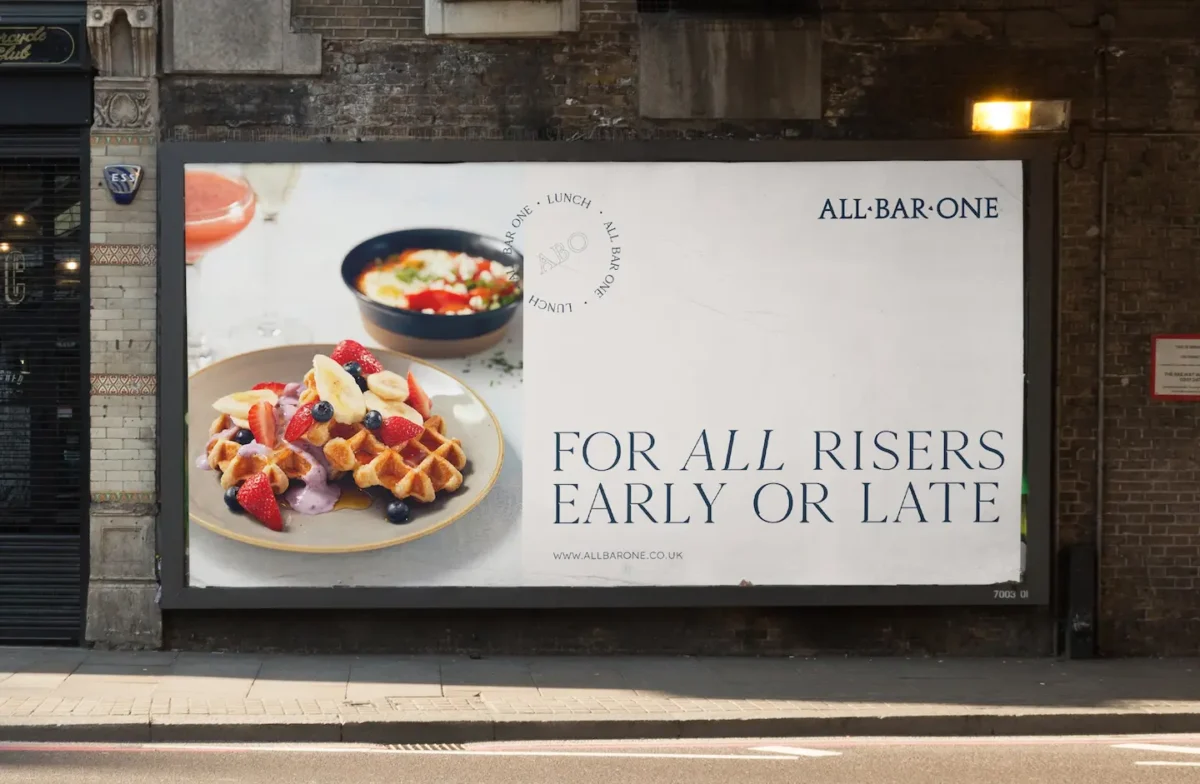
Partnering with national hospitality chain All Bar One (ABO), we engineered a festive-focused growth engine. Here’s the exact framework we used and the operational blueprint that other ambitious independents can use to outmanoeuvre the local competition throughout the year.
The foundations of this all stem from our Heart & Brain framework. This is our unified method for strategic business growth, combining emotional brand positioning and creative with performance marketing, local SEO and conversion infrastructure.
This is how you drive predictable footfall and capture the market share, and it all starts with rethinking how you sound online.
Step 1: Build brand distinctiveness
Before funding paid ads or relying on ‘Book Now’ buttons, you need to define a radically distinct brand identity. For ABO, we engineered a specific social tone of voice designed to sell an aspirational lifestyle.
This wasn’t based on guesswork. We audited existing customer sentiment and analysed local competitor blind spots to find the exact aspirational language their target audience actually uses.
But having a great tone of voice isn’t enough if you force the exact same content across every single channel. From Instagram to LinkedIn to X, audiences have different expectations from different channels. So to make the brand feel authentic across every touchpoint, you need to adapt the content natively for each platform.
Instead of posting highly polished ad graphics on X, use conversational, text-only formats that match exactly how users interact on that specific app. When you stop broadcasting like a corporate brochure and start speaking the language of the platform, your audience stops scrolling.


