Read time : 8 min
Insights

How premium brands compete against budget competitors.

You’ve built a premium brand and launched an equally premium digital experience. But what happens when cheaper alternatives enter the market? Here’s how to protect your positioning and keep growth moving without competing on price.
Written By:
Hattie - Digital Marketer
26th July 2026
How premium brands compete against budget competitors.

When a market grows quickly, it inevitably attracts competitors willing to compete on price.

For premium brands, this can create an uncomfortable shift. The product hasn’t changed, but suddenly there are cheaper alternatives occupying the same search results, advertising spaces and purchasing journeys.


The obvious response is often to lower prices or spend more on advertising. But neither solves the underlying problem. Discounting can weaken your margins and positioning, while simply increasing spend can make acquisition less efficient.


The stronger response is to make the value of the premium proposition clearer. And that means connecting your brand, visibility, website experience and marketing into a digital ecosystem, so that every interaction reinforces why your business is the one worth choosing.


Here’s what that looks like.


A website launch is only the start


Launching a new website can improve how a business looks, but it doesn’t automatically improve how it performs.


Your website is one part of a much wider customer journey. Someone might first encounter your brand through search, discover it through paid media, compare competitors on Google, visit your website and then return several days later before making a decision.


If brand, marketing and website experience operate separately, those interactions can tell different stories. This often results in increased traffic without stronger recognition, more clicks without more conversions, and growing acquisition costs without a corresponding increase in revenue.


A website works hardest when it is part of a connected system.


When does this matter?


This approach matters to all businesses from every sector, but the need for a unified, heart-and-brain growth system becomes clear when:


  • Cheaper competitors enter the market
  • Margins begin to shrink
  • Traffic increases but conversions drop
  • Brand positioning becomes diluted
  • Paid ads become less efficient
  • Customers have more choice and less reason to compare on anything other than price


These are often signs that the problem isn’t simply a lack of traffic. It’s that the market isn’t seeing enough value in the difference between your offer and the cheaper alternatives.



Person holding a smartphone, browsing an online shop displaying tableware products near a window.


01. Strengthen visibility


When new competitors enter a market, the first challenge is being seen. Organic search, paid media and content all play a role in creating visibility, but the objective shouldn’t be vanity metrics like impressions or clicks. What your business needs is to be recognised for something specific.


Technical SEO provides the foundation for search engines to discover and understand your website. Relevant structured data can help search engines interpret product information and, where supported, make pages eligible for richer search results.


Paid search creates targeted visibility when prospective customers are actively looking for a solution. Meanwhile, content helps build authority by answering the questions customers are asking and demonstrating the expertise behind your offering.


Together, these activities help create a wider visibility system around the brand. Rather than trying to shout louder than cheaper competitors, focus on making your premium proposition easier to discover and understand.

”
The stronger response is to make the value of the premium proposition clearer.

02. Make the difference clear


Visibility only creates an opportunity. Your proposition still needs to justify the choice.


Premium brands are often competing against alternatives that offer a similar functional product at a lower price. The difference therefore needs to be communicated through more than product specifications. Your positioning, messaging and website experience should make the value of choosing you clear.


That might be superior materials, specialist expertise, longevity, service, provenance, design or a combination of factors that matter to your audience. The important thing is that the ‘premium’ aspect isn’t left for the customer to work out.


The more clearly your brand communicates why it’s different, the less likely the decision becomes a straightforward price comparison.


03. Turn the website into part of the sales journey


Once someone clicks through to your website, the experience needs to reinforce the expectations created elsewhere. This is where UX and conversion optimisation become important.


A high-performing website makes it easy for visitors to understand the proposition, find the information they need and move towards the right next step. Start by looking at the points where high-value visitors are dropping out.


  • Are important product or service details difficult to find?
  • Are navigation and calls to action clear?
  • Is the checkout unnecessarily complicated?
  • Are trust signals visible when people need reassurance?
  • Does the website make it easy to compare options without pushing customers towards the cheapest one?


Tools like Hotjar and other behaviour analytics platforms can help identify where friction is occurring, while conversion testing helps refine the journey over time. The goal is to make the path to a confident decision as clear as possible.


Metal edging labeled EVEREDGE borders a gravel garden path with green plants in the background.


Example: How a premium brand scaled revenue without lowering prices


EverEdge is the UK’s first lawn edging company and a global leader in its sector. As the category became more competitive, cheaper alternatives began to appear alongside the brand. Rather than reducing prices, the objective was to strengthen its positioning and improve the performance of the digital customer journey.


Following a new website launch, we focused on three connected areas:


  • Strengthening the technical SEO foundation
  • Restructuring PPC around more efficient, high-intent targeting
  • Using real user behaviour to identify opportunities for conversion optimisation


The work was designed to connect visibility, positioning and website performance rather than treating each activity as a separate project. The results included:


  • 20.7% increase in total revenue
  • 24x return on Ad Spend (ROAS)
  • 60.7% increase in brand visibility in the SERPs
  • 22% increase in clicks


The important point, though, is that EverEdge didn’t respond to cheaper competition by lowering its prices. Instead, it strengthened the digital system around its premium proposition, making the brand easier to discover, understand and choose.


Want to know more? Read the full EverEdge case study here.


So, how should premium brands respond to budget competitors?


There’s no simple answer to that because there isn’t one channel that solves the problem.


SEO can improve visibility, but it can’t compensate for unclear positioning. Paid media can create demand, but it can’t make a weak proposition compelling. A new website can improve the experience, but it can’t create recognition on its own. Conversion optimisation can reduce friction, but it can’t fix a customer journey that doesn’t communicate why the brand is worth choosing.


The strongest response is a connected one. Brand establishes the value. Marketing creates visibility. Website communicates and validates the proposition. Your customer journey turns interest into action.


When all of those elements work together, premium brands can compete on more than price.


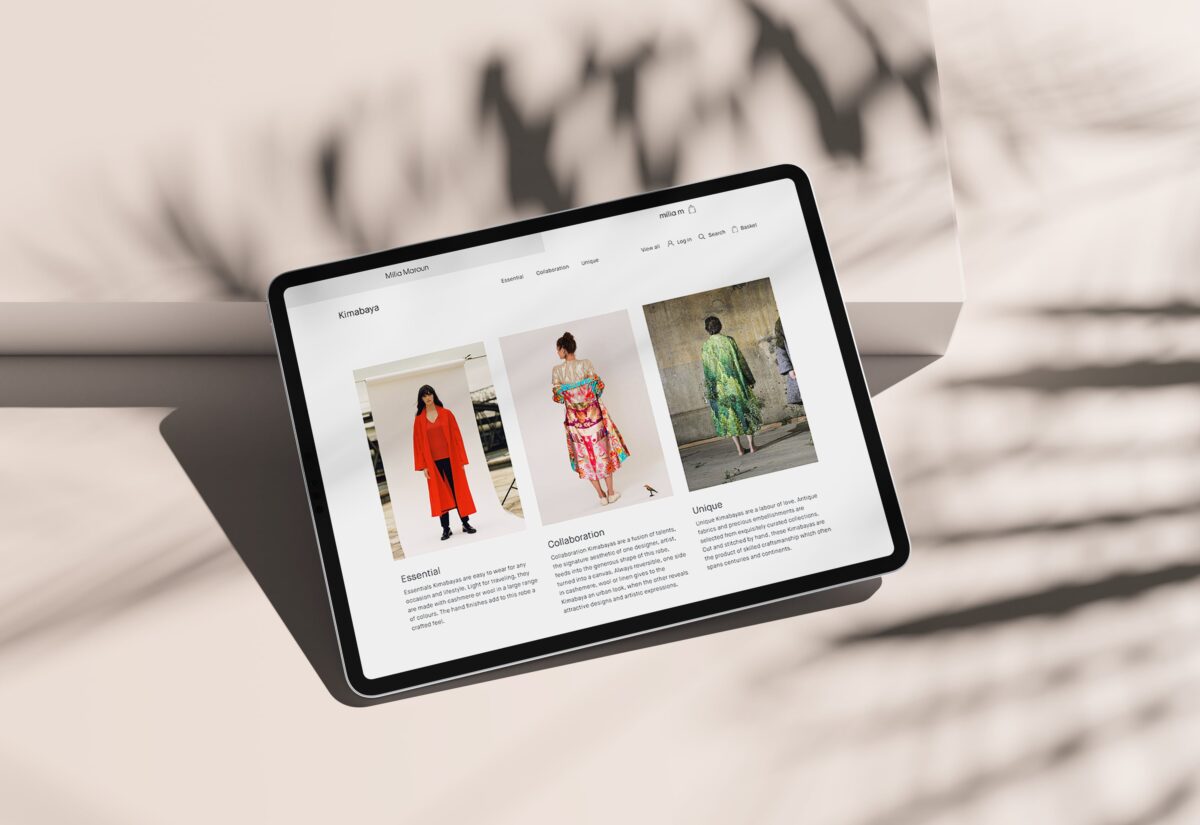
A tablet with Milia M website homepage designed by our web team


The premium advantage is clarity


Cheaper competitors don’t automatically win because they’re cheaper. They win when customers struggle to understand why the premium option is worth paying for. So, if you want to grow a premium brand, you need a more connected system that makes the value of the brand visible at every stage of the customer journey.


At The Curious, we help ambitious businesses connect brand, website and marketing into systems built around commercial growth. The aim is to move beyond activity for its own sake, connecting brand, website and marketing so the whole system works harder together.

FAQs

01. Should premium brands reduce their prices when cheaper competitors enter the market?

Not necessarily. Lowering prices can weaken margins and make the brand harder to differentiate. A stronger response is often to clarify the premium proposition, strengthen visibility and improve the customer journey so the value of choosing the brand is easier to understand.

02. How can a premium brand compete with cheaper competitors?

Premium brands can compete by making the value of their difference clear rather than relying on price. Strong positioning, relevant visibility, a convincing website experience and credible proof can help customers understand why the premium option is worth choosing.

03. Why is my website getting traffic but not enough sales?

Traffic does not guarantee conversion. Visitors may struggle to understand the proposition, find important information or take the next step. Reviewing navigation, messaging, calls to action, trust signals and user behaviour can help identify where potential customers are dropping out.

04. How can paid advertising support premium growth without increasing acquisition costs?

Paid advertising works more efficiently when it focuses on relevant, high-intent audiences and reinforces a clear premium proposition. Strong targeting, compelling messaging and a website experience designed to convert that traffic can help improve the return from paid activity.

05. What should a premium brand focus on when launching a new website?

A new website should do more than improve the visual experience. It should reinforce the brand positioning, make the value proposition clear, support discovery and provide customer journeys that make it easy to evaluate and act. The launch is the beginning of the optimisation process, not the end.

By Hattie - Digital Marketer
Everything begins with a conversation.
Let’s talk.
Start a Project //
Start a Project //
prefer a call: 01743 354 444
What are you looking for support with?
Contact me on
Business name or web address?
Can you tell us anymore details?


    prefer a call: 01743 354 444